
 |


|
| |
Yutai Chemical is a leading Chinese manufacturer of high-quality CHA framework SSZ-13 zeolite powder, engineered for selective catalytic reduction (SCR) of nitrogen oxides, methanol to olefins (MTO) processes, and industrial gas separation applications. Our SSZ-13 zeolite features a uniform 0.38×0.38nm pore size, exceptional BET surface area (>550m²/g), and superior thermal stability, making it the ideal catalyst material for demanding industrial environments. Founded in 2018 with 100 million RMB registered capital, we are a high-tech enterprise with core patents in zeolite synthesis, delivering consistent, customizable solutions to global chemical and environmental clients.
SSZ-13 is an aluminosilicate zeolite belonging to the ABC-6 family of small-pore zeolites, sharing the same chabazite (CHA) topology but with a controlled high silica content (Si/Al=5). Its unique 8-membered ring pore structure provides precise molecular sieving capabilities, allowing only small molecules to access the internal active sites while excluding larger species. The typical unit cell composition is QₓNaᵧAl₂.₄Si₃₃.₆O₇₂•zH₂O, where Q represents N,N,N-1-trimethyladamantammonium, the structure-directing agent originally developed by Chevron in 1985.
Our SSZ-13 zeolite is available in Na⁺, NH₄⁺, and H⁺ cation forms, each optimized for specific industrial applications. We offer fully customizable SiO₂/Al₂O₃ ratios to match your exact performance requirements, supported by our in-house R&D team and advanced analytical testing facilities.
Our SSZ-13 zeolite delivers measurable performance benefits that directly impact your bottom line:
Precise molecular selectivity: The 0.38×0.38nm uniform pore size enables highly selective adsorption and catalysis, boosting SCR NOₓ reduction efficiency and MTO ethylene/propylene selectivity while minimizing unwanted side reactions.
Exceptional thermal and hydrothermal stability: The high silica framework maintains structural integrity at temperatures up to 1000℃, extending catalyst service life and reducing replacement costs in high-temperature industrial processes.
High active site density: With a BET surface area exceeding 550m²/g, our zeolite provides abundant active sites for catalytic reactions, increasing reaction rates and product yields.
Low impurity content: Na₂O levels below 0.05% prevent catalyst poisoning and deactivation, ensuring consistent long-term performance.
Controlled particle size distribution: D50 particle size of 5-10μm optimizes slurry coating properties for SCR catalyst manufacturing, improving production efficiency and coating uniformity.
Parameter | Value | Application Benefit |
|---|---|---|
Framework Type | CHA | Precise molecular sieving |
Pore Diameter | 0.38×0.38nm | Selective small molecule access |
SiO₂/Al₂O₃ Ratio | Customizable | Tailored acid site density |
BET Surface Area | >550m²/g | High active site loading |
L.O.I (1000℃) | <10% | Excellent thermal stability |
Na₂O Content | <0.05% | No catalyst poisoning |
Particle Size (D50) | 5-10μm | Optimal coating performance |
Cation Forms | Na⁺, NH₄⁺, H⁺ | Versatile application compatibility |
Our SSZ-13 zeolite addresses critical challenges across multiple industries:
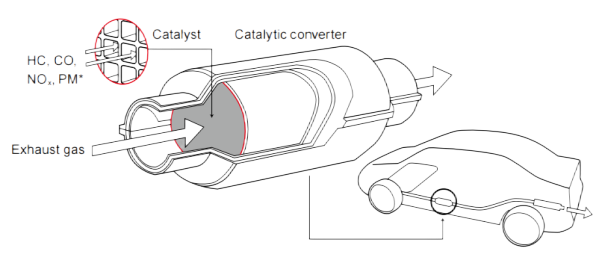
Diesel engine NOₓ SCR: Meets stringent Euro VI and China VI emission standards with a wide temperature activity window and excellent sulfur resistance. Our product has been successfully deployed in pilot-scale diesel emission control systems, demonstrating consistent performance under real-world operating conditions.
Methanol to Olefins (MTO): Maximizes light olefin yield by suppressing coke formation and large molecule byproducts, improving process economics for petrochemical manufacturers.
Gas adsorption and separation: Efficiently separates CO₂ from natural gas, purifies hydrogen, and removes alkanes/olefins from industrial streams, reducing energy consumption compared to traditional separation methods.
Industrial waste gas treatment: Effectively removes H₂S, SO₂, HCHO, NH₃, and other toxic VOCs, supporting compliance with environmental regulations.
Hydrogen storage: Provides safe, reversible hydrogen adsorption for clean energy applications.
As a specialized zeolite manufacturer with over 60 experienced professionals, we combine cutting-edge R&D capabilities with large-scale production expertise. Our state-of-the-art manufacturing facility in Shandong Province adheres to strict quality control standards, ensuring batch-to-batch consistency and reliable supply. We hold core patents in zeolite synthesis technology and maintain long-term strategic partnerships with leading domestic and international research institutions.
Our SSZ-13 zeolite is backed by comprehensive technical support, including product selection guidance, application optimization, and regeneration process recommendations. We offer flexible MOQs, competitive pricing, and global shipping support to meet your business needs.
Yes, we offer full customization of SiO₂/Al₂O₃ ratio, cation form, particle size, and surface chemistry. Our technical team will work with you to develop a tailored solution that aligns with your process parameters and performance goals.
Our SSZ-13 zeolite can be regenerated multiple times through controlled thermal treatment or mild chemical cleaning, depending on the application and fouling level. We provide detailed, application-specific regeneration protocols to maximize service life and maintain catalytic activity.
When stored in a cool, dry, sealed environment away from direct sunlight and corrosive gases, our zeolite powder maintains its full effectiveness for several years. We provide a 12-month written quality guarantee from the date of manufacture for all standard products.
We offer flexible MOQs to accommodate both R&D testing and large-scale production needs. Standard MOQ for bulk powder is 100kg, while smaller sample quantities (1-5kg) are available for initial evaluation purposes.
Yes, our dedicated technical support team offers end-to-end assistance, including slurry formulation guidance, coating process optimization, and on-site troubleshooting. We can also collaborate on custom catalyst development projects based on your specific requirements.
Contact our technical sales team today to request a free sample or custom quote for Yutai SSZ-13 zeolite. We offer fast turnaround times and dedicated support to help you select the optimal catalyst material for your application. Email us at info@yutaizeolite.com or fill out our online inquiry form, and a representative will respond within 24 hours.