
 |


|
| |
Yutai Chemical manufactures high-purity MRE framework ZSM-48 zeolite powder, a premium catalyst substrate engineered for demanding petrochemical and fine chemical transformations. Widely adopted in paraffin hydro-isomerization, m-xylene isomerization, methanol-to-hydrocarbons (MTH) and hydrocarbon cracking processes, this high-silica zeolite delivers consistent performance under rigorous industrial conditions. Our ZSM-48 features precisely controlled pore size, optimized acidity and minimal impurity levels, delivering enhanced catalytic efficiency and process stability. Backed by advanced manufacturing processes and rigorous quality control, our zeolite supports meet the strictest industrial performance standards for chemical production facilities.
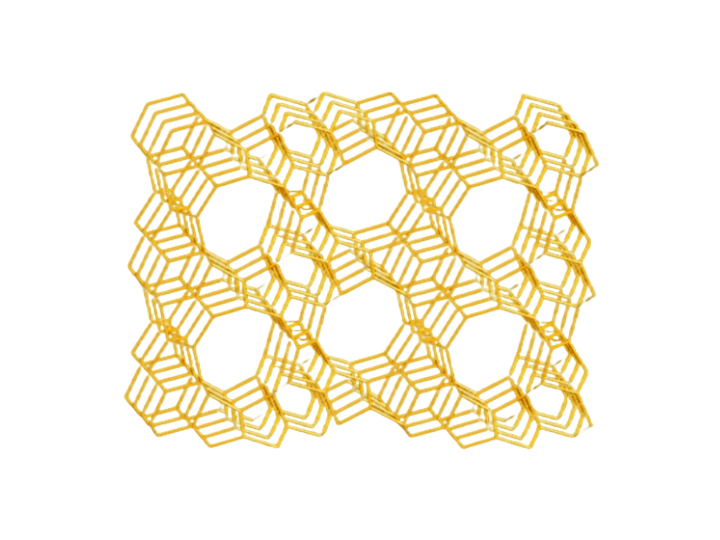
Uniform 5.3×5.6 Å pore channels optimize molecular diffusion, maximizing catalyst-reactant contact area and enhancing reaction specificity. This shape-selective architecture is particularly advantageous for paraffin isomerization and xylene conversion processes, enabling precise control over product composition.
Withstands high-pressure reactor conditions and mechanical attrition, maintaining structural integrity throughout extended operation cycles. This reduces catalyst bed degradation and pressure drop fluctuations that disrupt production consistency and increase maintenance costs.
Ensures uniform heat distribution across the catalyst bed, eliminating localized hotspots and preventing unwanted side reactions. This improves process consistency and increases overall product yield per batch, reducing energy consumption per unit of output.
Advanced synthesis methods achieve <0.02% Na₂O content, preserving catalyst activity and preventing product contamination. This purity level is critical for high-value chemical manufacturing where trace impurities compromise final product quality and regulatory compliance.
Lower acidity compared to ZSM-5 minimizes over-cracking of feedstocks, while optimized crystal sizes reduce diffusion limitations for reactive intermediates. This combination enhances selectivity for desired end products and reduces waste generation.
Increases conversion rates and product selectivity, leading to higher throughput and superior product quality. Reduces raw material waste and lowers energy consumption per unit of output, directly improving operational profitability.
Excellent thermal and mechanical stability prolongs catalyst service life, reducing replacement frequency and associated downtime. Delivers significant long-term operational savings for production facilities operating continuous processes.
Compatible with multiple hydrocarbon transformation processes, including hydrocracking, isomerization and oxidation. This simplifies inventory management for facilities operating multiple production lines and reduces procurement complexity.
Suitable for both batch and continuous production systems, with customizable catalyst loading ratios to match specific process parameters. Our technical team provides tailored loading recommendations for each unique application.
Parameter | Value |
|---|---|
Framework Structure | MRE |
SiO₂/Al₂O₃ Molar Ratio | >120 |
Pore Diameter | 5.3×5.6 Å |
BET Surface Area | >230 m²/g |
Cation Form | Na⁺, NH₄⁺, H⁺ |
Na₂O Content | <0.02% |
Particle Size (D50) | 5-10 μm |
Loss on Ignition (1000℃) | <10% |
Shape-selective catalysis improves isomer yield and octane rating in gasoline production, meeting modern fuel quality standards and regulatory requirements.
Enhances p-xylene selectivity, a critical intermediate for polyester, plastic and fiber manufacturing industries.
Efficient conversion of methanol to high-value hydrocarbon products for fuel and chemical feedstock applications.
Controlled cracking of heavy feedstocks into lighter, more valuable fractions with minimal unwanted byproducts.
Its unique MRE structure and large surface area maximize catalyst-reactant interaction, while lower acidity minimizes unwanted side reactions that reduce overall process efficiency. Nano-sized crystals further reduce diffusion limitations for reactive intermediates, boosting catalytic turnover rates.
Optimal loading varies by reaction type, feedstock composition and catalyst formulation. Our technical team provides customized recommendations based on your specific process parameters, including temperature, pressure and desired product specifications.
Yes, our ZSM-48 zeolite is engineered for reliable long-term performance in both batch and continuous production environments. Its exceptional mechanical and thermal stability ensures consistent operation over extended production runs.
Contact our technical team today to discuss your specific catalyst support requirements. We offer customized solutions and comprehensive technical support to optimize your process performance and achieve your production goals.