
Views: 0 Author: Site Editor Publish Time: 2026-02-12 Origin: Site


Isomerization catalysts are a crucial part of the refining process. How do these catalysts enhance the quality of fuel and reduce emissions? In this article, we will explore the role of catalysts in converting crude oil into premium fuels.
Catalysts are substances that accelerate chemical reactions without being consumed in the process. Their primary function is to lower the activation energy required for reactions to occur, allowing the process to happen at a much faster rate.
Catalysts facilitate reactions by providing an alternative reaction pathway that requires less energy. This means that the activation energy for the reaction is lowered, enabling molecules to react more quickly and efficiently.
● Energy Efficiency: By lowering the energy barrier, catalysts help reactions happen faster and with less energy input.
● Faster Reactions: In isomerization, catalysts rearrange the molecular structure of hydrocarbons, making the transformation into branched isomers happen rapidly.
● Higher Product Value: The branched isomers formed have higher octane numbers, meaning they are of greater value in fuel and chemical production.
Benefit of Catalysts in Isomerization | Impact on Reaction |
Lower Activation Energy | Faster reactions with reduced energy consumption |
Increased Reaction Rate | High yield in less time, essential for industrial processes |
Improved Fuel Properties | Higher octane ratings, better engine performance and fuel efficiency |
● Molecular Rearrangement: In isomerization, catalysts help in the conversion of linear hydrocarbons into branched isomers. These isomers have improved combustion properties, which translates into better performance and lower emissions in engines.
● Octane Enhancement: The branched hydrocarbons produced through isomerization have higher octane numbers, which make them more efficient and valuable in fuel production.
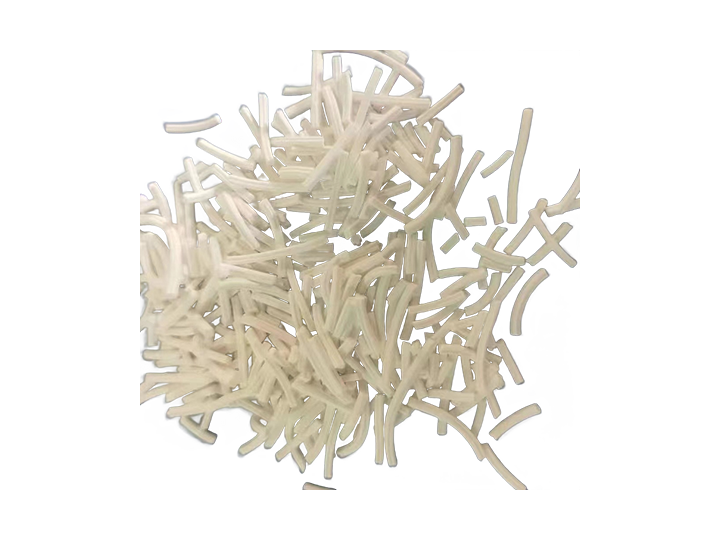
● Homogeneous Catalysts: These catalysts exist in the same phase as the reactants, typically in a liquid form. They are effective in small-scale reactions, especially where fine control of reaction conditions is required. However, they are not ideal for large-scale industrial applications, as separating the catalyst from the product after the reaction can be challenging.
● Heterogeneous Catalysts: These catalysts are in a different phase from the reactants, typically solid while the reactants are in liquid or gas form. They are commonly used in industrial isomerization, particularly in the petrochemical industry.
Catalyst Type | Advantages | Limitations |
Homogeneous Catalysts | - Fine control of reaction conditions - High selectivity for specific isomers | - Difficult to separate from the product - Not ideal for large-scale applications |
Heterogeneous Catalysts | - Easy separation from products - High stability and resistance to impurities - Ideal for large-scale industrial applications | - May require higher temperatures for optimal activity - Lower selectivity compared to homogeneous catalysts |
Heterogeneous catalysts like Yutai’s zeolite-based catalysts are particularly well-suited for isomerization because they can withstand the harsh conditions typically encountered in refining processes, such as high temperatures and the presence of contaminants.
Isomerization catalysts play a pivotal role in increasing the octane rating of gasoline by converting straight-chain hydrocarbons into branched isomers. This transformation is essential for improving the fuel's combustion efficiency, which results in better engine performance and reduced knocking.
By converting linear alkanes, which have lower octane ratings, into their branched counterparts, catalysts significantly raise the fuel’s resistance to knocking, making it more suitable for modern engines.
By improving the hydrocarbon structures in biofuels, these catalysts ensure that biofuels meet the necessary standards for use in modern engines. This not only boosts the quality of biofuels but also helps reduce dependency on fossil fuels, making the entire process more sustainable. The ability to upgrade biofuels into more efficient and environmentally-friendly fuels is one of the reasons isomerization catalysts are gaining attention in renewable energy sectors.
Biofuel Feedstock | Isomerization Process | Benefit of Using Catalysts |
Ethanol | Hydrocarbons conversion | Increased fuel octane, engine performance |
Biodiesel | Hydrocarbon restructuring | Cleaner, more efficient biofuel production |
Waste oils and fats | Isomerization of lipids | Improved cold-flow properties, higher fuel quality |
Isomerization catalysts not only enhance fuel quality but also contribute to environmental sustainability.
By improving fuel combustion properties, catalysts help reduce harmful emissions like nitrogen oxides (NOx), sulfur, and particulate matter that are produced during fuel burning. This is especially critical in the face of stringent environmental regulations governing fuel quality and emissions.
Platinum-based zeolite catalysts, like ZSM-5 and SSZ-13, are among the most efficient catalysts used in the isomerization process. These catalysts play a significant role in improving the octane rating of gasoline, ensuring that the fuel meets modern engine requirements.
ZSM-5 and SSZ-13 are specifically designed to perform well under high temperatures, which is common in petroleum refining. Their high surface area and unique pore structures allow for efficient interactions between the catalyst and hydrocarbons, promoting the conversion of hydrocarbons at optimal rates.
● High Efficiency in Isomerization: These catalysts ensure that hydrocarbons are isomerized quickly and effectively, which significantly boosts fuel quality and reduces production costs.
● Environmental Benefits: By improving the combustion properties of fuels, platinum-based zeolite catalysts contribute to cleaner emissions and help meet environmental regulations.
Catalyst Type | Applications | Benefits |
ZSM-5 | Gasoline isomerization | Increases octane numbers, reduces knocking |
SSZ-13 | Gasoline, biofuels, petrochemicals | High resistance to impurities, efficient at high temperatures |
Pt/Sulfated Zirconia catalysts represent an advanced option for isomerization, offering numerous advantages over traditional chlorinated catalysts. These catalysts combine platinum’s hydrogenation abilities with sulfated zirconia’s acidity, resulting in a bifunctional catalyst that operates effectively even in challenging reaction environments.
● High Resistance to Impurities: Unlike chlorinated alumina-based catalysts, Pt/Sulfated Zirconia catalysts show a high resistance to impurities such as sulfur and nitrogen, which are common in crude oil feedstocks.
● Better Performance at Lower Temperatures: These catalysts perform effectively at lower temperatures, making them more energy-efficient and easier to operate under less demanding conditions. This reduces the overall operational costs and contributes to sustainability.
● Longer Catalyst Life: The unique design of Pt/Sulfated Zirconia ensures a longer lifespan due to its resistance to coke formation and its stability at high temperatures.
Catalyst Feature | Advantage | Impact |
High Impurity Resistance | Less sensitivity to sulfur and nitrogen | Improved catalyst performance and lifespan |
Low Temperature Operation | Better efficiency at lower temperatures | Energy savings, reduced operational costs |
Chlorine-Free | No need for chlorine agents | Lower environmental impact, cost savings |
Yutai Chemical Co., Ltd. is a high-tech chemical manufacturer based in Shandong, China, specializing in zeolite materials and catalysts that serve the petrochemical and environmental industries.
Founded in 2018, Yutai quickly established itself as a leading producer of specialty zeolite powders and customized catalysts, particularly for isomerization and petrochemical refining processes. We have developed a reputation for delivering high-quality, reliable, and innovative solutions to some of the most pressing challenges in these industries.
● Specialty Catalysts & Zeolite Materials
We manufacture cutting-edge zeolite catalysts, including ZSM-5, SSZ-13, and other custom formulations, which are widely used in hydroisomerization, dewaxing, emission control, and fine chemical synthesis.
● Custom Solutions
In addition to our standard offerings, we specialize in tailored catalyst solutions designed to meet specific industrial needs. By customizing catalysts to optimize performance and yield, we ensure our clients achieve the best results in their unique processes. Whether for refining, biofuel production, or emission control, our catalysts provide superior performance and efficiency.
● ISO Certifications: These certifications reflect our commitment to continuous improvement in quality control and environmental management. This also ensures that every catalyst and material we produce meets the highest standards of reliability and performance.
● Advanced Analysis Center: Our state-of-the-art analysis center uses cutting-edge technologies to guarantee that our catalysts consistently meet customer specifications and industry requirements. This allows us to deliver products that exceed expectations and perform reliably over extended periods.
Innovation is at the heart of Yutai Chemical’s operations. We continuously invest in research and development to create new catalyst technologies that drive efficiency, sustainability, and performance improvements across all our product lines.
Yutai Chemical plays a crucial role by providing high-performance zeolite catalysts, including ZSM-5 and SSZ-13, which are ideal for isomerization processes. These products enhance octane ratings and reduce environmental impact, offering value to refineries. Yutai Chemical’s commitment to quality and innovation ensures that their catalysts remain a reliable choice in the petrochemical industry.
A: Isomerization catalysts are used to convert straight-chain hydrocarbons into branched isomers, improving fuel performance and octane ratings.
A: They lower activation energy, speeding up the reaction and transforming hydrocarbons into high-value isomers, essential for fuel production.
A: Yutai Chemical’s zeolite catalysts enhance fuel quality, increase octane numbers, and provide environmental benefits in the refining process.
A: Platinum-based catalysts are highly efficient, providing better performance and stability under harsh industrial conditions.
A: Catalysts improve fuel combustion properties, reducing harmful emissions like NOx and sulfur, helping meet environmental regulations.


