
Views: 0 Author: Site Editor Publish Time: 2025-12-17 Origin: Site


Are you choosing between bead and pellet molecular sieves? The right shape can make or break the efficiency of your process.
Molecular sieves play a crucial role in separating, purifying, and dehydrating gases and liquids across industries. But how do you know which shape suits your needs?
In this article, we’ll explore the key differences between bead and pellet molecular sieves. You’ll learn about their performance, cost-effectiveness, and which one works best for your industrial applications.
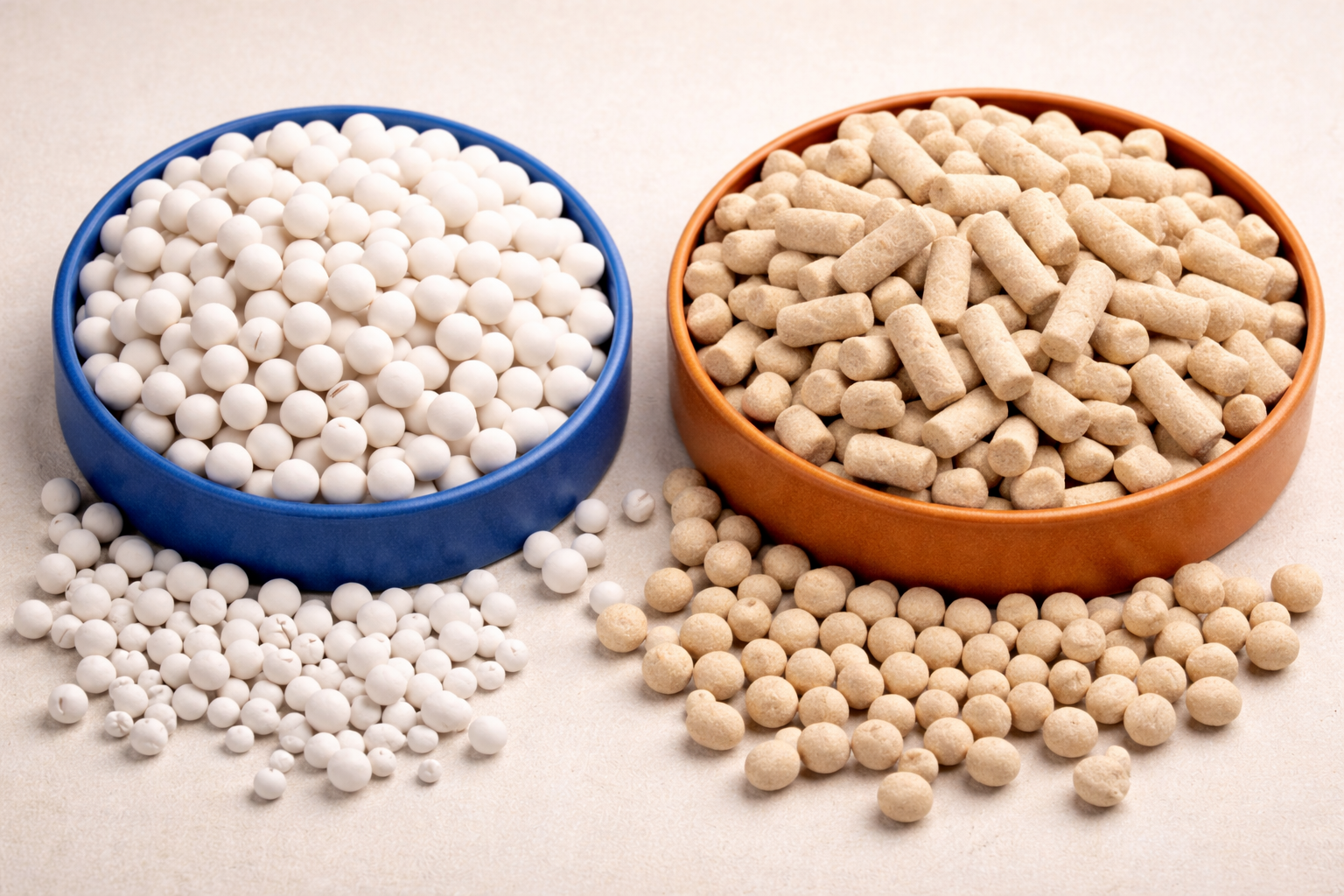
| Feature | Pellet Molecular Sieves | Bead Molecular Sieves |
|---|---|---|
| Shape | Cylindrical | Spherical |
| Durability | High, withstands mechanical stress | Moderate, prone to abrasion |
| Adsorption Speed | Slower | Faster |
| Common Applications | Gas drying, air separation, dehydration | Fluidized bed reactors, PSA processes |
| Pressure Drop | Higher | Lower |
| Cost-effectiveness | More cost-effective for long-term use | Higher upfront cost, but more efficient |
Pellet molecular sieves are cylindrical in shape, offering superior mechanical strength and durability under pressure. The larger surface area per unit volume of pellets allows them to adsorb large amounts of molecules, making them ideal for high-throughput operations. These sieves are specifically designed to withstand mechanical stress, which is particularly important in fixed-bed reactors where the adsorbent is subjected to constant flow and pressure over long periods.
Pellets are widely used in applications such as gas drying, air separation, and dehydration in large-scale industrial settings. Their shape helps minimize the formation of dust or fines, ensuring long-lasting performance and reducing maintenance costs. The robust cylindrical shape also prevents pellet breakage, which can occur in systems with high mechanical stress.
Bead molecular sieves, unlike pellets, have a spherical shape that offers distinct advantages in terms of flow characteristics. Their rounded form allows for smoother movement through fluidized bed reactors, making them an ideal choice for applications that require rapid separation and short cycle times. Beads are preferred in processes where quick adsorption and desorption are needed, such as in pressure swing adsorption (PSA) systems or other fast-cycle processes.
One of the key benefits of beads is their ability to maintain a uniform flow. This uniformity results in minimal resistance and pressure drop, ensuring better efficiency in high-speed adsorption applications. Their spherical shape enhances their interaction with gas or liquid streams, providing faster adsorption kinetics and a more consistent performance, which is critical in industries such as pharmaceuticals, petrochemicals, and air separation.
The efficiency of molecular sieves in terms of adsorption is a major factor in selecting between beads and pellets. Pellets typically have a slower adsorption rate due to their larger size and cylindrical shape, but they excel in applications that demand stability and long-term performance. Pellets provide excellent performance in systems that require continuous flow and high throughput, making them suitable for large-scale operations.
Bead molecular sieves, however, offer a faster adsorption rate because their spherical shape allows them to interact more readily with molecules in the fluid stream. This makes beads ideal for applications requiring rapid separation and high purity, where fast adsorption kinetics and low pressure drop are essential. In many industrial settings, the speed of adsorption is a critical factor in meeting production demands.
Tip: When working with high-speed separation systems or processes that require quick adsorption, bead molecular sieves are often the better choice due to their faster adsorption kinetics and higher efficiency.
Pellet molecular sieves are known for their durability, particularly in high-pressure and high-flow applications. Their cylindrical shape provides structural integrity, allowing them to withstand significant mechanical stress over long periods. This makes them ideal for use in fixed-bed reactors, which are often subjected to constant pressure and flow. In these settings, pellets offer a long operational life and require less frequent replacements, making them a cost-effective option in the long term.
On the other hand, bead molecular sieves are designed for rapid adsorption, which makes them highly effective in systems that require quick cycles and high-speed separation. Beads are less durable compared to pellets, as their spherical shape can lead to higher abrasion rates and potential breakage when subjected to mechanical stress. Therefore, when long-term stability and resistance to wear are crucial, pellets are often the preferred option. However, for processes where speed is the priority, beads offer significant advantages in terms of efficiency.
The flow behavior of molecular sieves is an important factor that affects the efficiency of the adsorption process. Pellets, due to their larger size and cylindrical shape, can cause uneven flow if not packed tightly in the bed. This uneven flow, also known as channeling, can reduce the effectiveness of the adsorption process by allowing the gas or liquid to bypass parts of the bed. Channeling can lead to lower efficiency and increased energy consumption.
Beads, on the other hand, provide more uniform flow because of their spherical shape. This uniformity minimizes channeling and allows the gas or liquid to pass through the sieve bed more evenly. As a result, beads generally experience lower pressure drops compared to pellets, which can be a significant advantage in applications that require consistent flow and minimal energy loss. The ability to maintain a uniform flow pattern enhances the overall efficiency of the system, especially in fluidized bed reactors.
Pellet molecular sieves tend to be more cost-effective for large-scale operations, especially when durability and longevity are crucial. The robustness of pellets ensures that they can handle high-flow, high-pressure environments for extended periods without degrading. This makes pellets a more economical option for industrial processes that require continuous operation and minimal downtime.
However, beads provide faster adsorption and more efficient performance in applications that require short cycle times and high precision. While beads may have a higher upfront cost, their superior adsorption speed and flow characteristics can result in higher overall efficiency in systems with demanding process requirements. In fast-cycle applications, the benefits of beads may outweigh the initial investment cost, offering greater value over time.
For processes that operate under high pressure and require long-term durability, pellet molecular sieves are the preferred choice. The cylindrical shape of pellets helps to prevent damage under pressure, ensuring that they maintain their structural integrity even in challenging environments. Pellets also excel in high-flow systems, such as fixed-bed reactors, where they can withstand continuous operation without breaking down. Their durability and strength under pressure make them ideal for applications such as gas drying and air separation, where consistent performance is critical.
Beads, in contrast, may not perform as well in high-stress environments due to their spherical shape, which is more prone to abrasion and breakage. If your process involves high mechanical stress or long-term use under constant flow conditions, pellets are the better choice. For systems with high pressure and high flow, pellets provide the necessary durability to maintain optimal performance over time.
Beads are particularly well-suited for fluidized bed reactors, where the molecular sieve is in motion and must interact quickly with the gas or liquid stream. The spherical shape of beads allows them to flow more freely and evenly, which results in faster adsorption and desorption. This makes beads an excellent choice for applications that require quick separation, such as pressure swing adsorption (PSA) or other fast-cycle processes.
In fast-cycle processes, the ability to achieve rapid adsorption is crucial to maintaining high throughput and ensuring that the system meets production targets. Beads, with their greater surface area and quicker kinetics, provide a significant advantage in these types of applications. For industries requiring high-speed adsorption, beads are often the optimal solution.
| Application | Best Choice | Reason for Choice |
|---|---|---|
| Gas Drying | Pellet Molecular Sieves | Durability under high airflow, low maintenance |
| Petrochemical Processing | Pellet Molecular Sieves | Stability under pressure, long operational life |
| Air Separation | Bead Molecular Sieves | Faster adsorption, high purity separation |
| Pressure Swing Adsorption | Bead Molecular Sieves | Quick adsorption and desorption cycles |
In gas drying applications, pellet molecular sieves are often the preferred choice due to their stability under strong airflow. The robust structure of pellets allows them to withstand the mechanical stress caused by high-speed gas flows, making them ideal for continuous operations in large-scale industrial settings. Pellets are also less likely to break under stress, ensuring that the system remains operational for longer periods.
However, beads are better suited for rapid separation processes, where quick adsorption and desorption are required. In such cases, beads help optimize throughput and ensure higher purity levels in the final product. The faster adsorption kinetics of beads make them ideal for applications where time is a critical factor.
In the petrochemical industry, where high durability and resistance to mechanical wear are crucial, pellet molecular sieves are often the best choice. Pellets provide long-lasting performance in environments where the sieve is subjected to continuous flow and high pressure. Their durability ensures that they can handle the rigorous demands of petrochemical processing, which often involves large-scale operations.
In air separation processes, where precise control and fast adsorption are required, beads are typically favored. The spherical shape of beads allows for more uniform flow and faster adsorption, making them ideal for applications that require high purity and efficiency. Beads are particularly effective in processes that require rapid cycle times, ensuring that the system can meet production demands quickly and efficiently.
| Factor | Pellet Molecular Sieves | Bead Molecular Sieves |
|---|---|---|
| Initial Cost | Lower | Higher |
| Longevity and Durability | Long-lasting, fewer replacements | Shorter lifespan, more replacements |
| Adsorption Speed | Slower, steady | Faster, efficient |
| Operational Efficiency | Suitable for continuous operations | Ideal for fast-cycle processes |
| Overall Cost (Long-term) | More cost-effective in large-scale operations | May justify higher cost for quicker results |
When it comes to cost, pellets are typically the more economical choice for large-scale operations that require long-term stability. Their durability reduces the need for frequent replacements, making them a more cost-effective option over time. Pellets also offer a lower pressure drop, which contributes to energy savings in many systems.
Beads, while generally more expensive upfront, offer superior performance in fast-cycle applications. Beads’ faster adsorption and lower pressure drop can lead to significant efficiency gains, especially in processes that require quick separation. In these cases, the higher cost of beads is often justified by the improved performance and increased productivity they provide.
To choose the right molecular sieve shape for your operation, consider factors such as pressure, temperature, and throughput. Pellets are ideal for high-pressure, high-flow applications, while beads excel in processes that require rapid adsorption and precise control. Matching the sieve shape to your production needs will help ensure that your system operates efficiently and effectively.
Always weigh the long-term benefits of durability and cost-effectiveness against the short-term advantages of faster adsorption and higher performance. By evaluating the specific demands of your process, you can select the most suitable molecular sieve shape for your needs.
Choosing the right molecular sieve shape depends on your system’s needs. Pellets provide durability and cost benefits for high-pressure, high-flow applications. Beads, on the other hand, are better for processes requiring fast adsorption and precise separation.
By considering your system's requirements, you can optimize the sieve selection for improved performance. Pellets are ideal for longevity and low maintenance, while beads excel in speed and efficiency.
For industries seeking reliable molecular sieves, Shandong Yutai Chemical Co., Ltd. offers high-quality products. Their molecular sieves are designed to deliver efficiency, long-term performance, and cost savings for a wide range of applications.
A: Bead molecular sieves are spherical and offer faster adsorption, while pellet molecular sieves are cylindrical, providing durability and stability under high pressure. The choice depends on the specific needs of your system.
A: The choice depends on your application. Beads are ideal for fast-cycle processes, while pellets excel in high-pressure, high-flow settings due to their durability and cost-effectiveness.
A: Pellet molecular sieves offer long-term durability and are cost-effective for high-pressure, high-flow applications, making them perfect for large-scale operations.
A: Beads have faster adsorption kinetics and a uniform flow, making them ideal for processes like pressure swing adsorption where speed and efficiency are crucial.
A: Yes, pellets tend to be more cost-effective for long-term use, especially in large-scale operations, due to their durability and fewer replacements needed over time.
A: Yes, molecular sieves, including both beads and pellets, can be regenerated and reused, although their lifespan may vary depending on the operating conditions and type of sieve.


