
Views: 0 Author: Site Editor Publish Time: 2026-02-03 Origin: Site


Looking to enhance your refining processes? Zeolite powders play a crucial role in catalysis, but which type is better for petrochemical refining—natural or synthetic? In this article, we will compare natural zeolites with synthetic zeolites in refining applications.
Zeolite powders are made up of aluminosilicate frameworks, primarily consisting of silicon dioxide (SiO₂) and aluminum oxide (Al₂O₃). These elements form a robust structure where silicon atoms are connected to oxygen atoms, creating a highly porous framework.
● Key Chemical Components:
○ Silicon (SiO₂): Responsible for the basic framework of zeolites.
○ Aluminum (Al₂O₃): Provides the negative charge in the framework, attracting cations.
○ Cations: These are exchangeable metal ions like sodium (Na+), potassium (K+), and calcium (Ca2+), which can be swapped depending on the application.
The arrangement and size of the pores within the zeolite structure determine how effectively it can absorb molecules, making it essential for applications like adsorption and catalysis. The high surface area of zeolite powders allows for increased interaction with gases and liquids, which is key in refining processes.
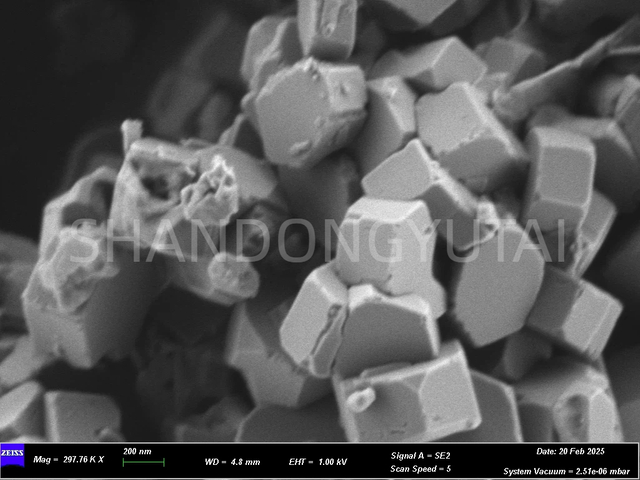
Zeolite powders play a critical role in petrochemical refining by acting as catalysts, adsorbents, and molecular sieves. Their ability to facilitate reactions, especially in processes like Fluid Catalytic Cracking (FCC) and isomerization, is unmatched due to their tailored pore structure and thermal stability.
● Petrochemical Refining:
○ Zeolite powders, like those from Yutai Chemical, are used to convert large hydrocarbons into smaller, valuable products like gasoline and diesel.
○ FCC utilizes ZSM-5 and other zeolites to crack complex hydrocarbons into more desirable fuels.
● Environmental Applications:
○ Emission Control: Zeolite powders help remove harmful substances, such as NOx emissions in automotive catalytic converters.
○ VOC Treatment: ZSM-5 zeolite powders are especially effective in volatile organic compound (VOC) removal, helping in environmental protection by reducing industrial emissions.
Zeolite Type | Application | Effectiveness |
ZSM-5 | Fluid Catalytic Cracking (FCC) | High selectivity and yield in hydrocarbon cracking |
ZSM-48 | Hydrocracking and isomerization | Improved selectivity in the production of high-value fuels |
SSZ-13 | Methanol-to-Olefin (MTO) processes | Efficient in converting methanol to valuable olefins |
ZSM-23 | Hydroprocessing of heavy oils | Enhanced efficiency in breaking down larger hydrocarbons |
● Formation Process: The interaction between volcanic rocks and alkaline conditions leads to the formation of zeolites over thousands of years, making natural zeolites a non-renewable resource.
● Composition: Natural zeolites are made up of aluminosilicate minerals that include elements like silicon (SiO₂), aluminum (Al₂O₃), and various cations (Na, K, Ca, Mg, Fe), which influence their adsorption and catalytic properties.
Despite their natural occurrence, the composition of natural zeolites can vary significantly depending on the geological environment.
Natural zeolites are used in petrochemical refining and adsorption processes due to their ability to facilitate catalytic reactions, especially in low-cost applications.
● Catalysis: In refining processes like fluid catalytic cracking (FCC), natural zeolites can be used as a catalyst to break down larger hydrocarbons into more valuable fuels. However, their lower crystallinity and impurities (like Na, K, and Ca) limit their efficiency compared to synthetic zeolites.
● Adsorption: Natural zeolites can adsorb toxic gases, volatile organic compounds (VOCs), and heavy metals. While they are widely used in environmental applications, their selectivity and adsorption capacity are not as reliable or efficient as synthetic zeolites, particularly when high levels of purity are required.
● Impurities: Natural zeolites often contain sodium (Na), calcium (Ca), and iron (Fe), which can interfere with their catalytic properties. These impurities can reduce the zeolites’ ability to catalyze reactions effectively, leading to lower yield and productivity.
● Low Crystallinity: Natural zeolites generally exhibit lower crystallinity compared to synthetic varieties. This lack of uniformity makes it difficult to predict and optimize their performance, especially in high-precision applications like fluid catalytic cracking (FCC).
Limitation | Impact on Refining and Catalysis |
Impurities (Na, K, Fe) | Decreases catalytic activity, leading to inefficiency. |
Low Crystallinity | Reduces precision in catalytic reactions and adsorption capacity. |
Inconsistent Composition | Limits reliability and performance predictability in industrial processes. |
Synthetic zeolites are engineered to meet specific industrial needs, with a primary focus on achieving purity, uniform pore size, and precise Si/Al ratios. Unlike natural zeolites, which can vary in composition and quality, synthetic zeolites are made under controlled conditions, ensuring consistent performance across different applications.
● Manufacturing Process:
○ Synthesis: The process involves combining silica (SiO₂) and alumina (Al₂O₃) in specific ratios, then subjecting the mixture to high temperatures and controlled conditions to form the zeolite framework.
○ Purity: Synthetic zeolites are produced using pure chemicals, leading to a high degree of purity and predictable characteristics.
○ Pore Structure: The uniform pore size ensures precise molecular sieving capabilities, making synthetic zeolites ideal for catalysis and adsorption applications in refining.
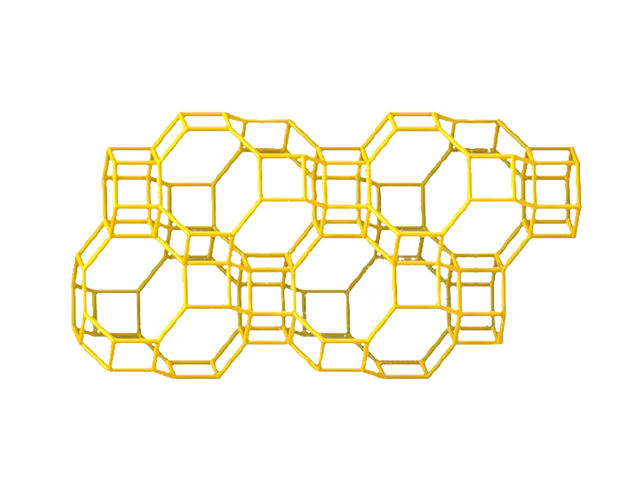
Synthetic zeolites stand out for their high performance and reliability, especially in the demanding environment of petrochemical refining.
● Thermal Stability: Synthetic zeolites like ZSM‑5 can withstand the high temperatures encountered during refining, ensuring consistent performance and longer catalyst life.
● High Catalytic Activity: Synthetic zeolites, due to their controlled structure, offer higher catalytic efficiency, promoting faster and more selective reactions, crucial for refining operations.
● Selectivity: Zeolite powders such as ZSM‑5 are particularly known for their shape-selectivity, allowing them to catalyze specific reactions by allowing only certain molecules to pass through their pores.
Zeolite Type | Key Advantage | Application in Refining |
ZSM‑5 | High selectivity and thermal stability | Hydrocracking, isomerization, and aromatization |
ZSM‑48 | Precision in hydrocarbon conversion | Heavy oil processing, hydrocracking |
ZSM‑23 | Superior catalytic efficiency | Catalytic cracking, alkylation |
One of the key strengths of synthetic zeolites is their versatility across different refining processes. Due to their uniform structure, they can be applied in a wide range of catalytic and adsorption reactions, contributing to greater process efficiency and consistent quality.
● ZSM‑5, ZSM‑48, and ZSM‑23 are all designed to meet the diverse needs of refining processes.ZSM‑5 is excellent for hydrocarbon cracking and aromatization due to its small pore size and shape-selective properties.
○ ZSM‑48 and ZSM‑23 provide additional versatility in hydroprocessing and hydrocracking, as their medium pore size allows for selective catalytic activity.
Zeolite Type | Pore Size | Primary Use in Refining |
ZSM‑5 | Small | Catalytic cracking, aromatization |
ZSM‑48 | Medium | Hydrocracking, isomerization |
ZSM‑23 | Medium | Hydroprocessing, desulfurization |
When comparing natural zeolites with synthetic zeolites, synthetic zeolites like ZSM‑5 clearly outperform their natural counterparts in catalytic activity, selectivity, and stability.
● Synthetic zeolites, with their precise engineering, provide higher selectivity, meaning they can target specific molecules for reactions, leading to higher yield and reduced byproducts.
● In contrast, natural zeolites often come with impurities and inconsistent crystallinity, which can reduce catalytic efficiency and reaction rates in complex refining processes.
● Synthetic zeolites, although initially more expensive, provide better long-term value due to their higher efficiency and consistent performance. Their ability to maintain high catalytic activity and resist degradation in extreme conditions reduces the need for frequent replacements or modifications.
● Over time, synthetic zeolites contribute to cost savings by improving refining efficiency, reducing energy consumption, and increasing yield.
Thus, even though synthetic zeolites have a higher upfront cost, they are often a more cost-effective solution in the long run due to their better overall performance and sustainability in refining processes.
● Natural zeolites:
The extraction of natural zeolites can also contribute to environmental degradation, as large-scale mining can lead to the destruction of local habitats and ecosystems.
This makes natural zeolites less sustainable over time.
On the other hand, synthetic zeolites are manufactured in controlled conditions, and their production process can be optimized to minimize environmental impact.
● Synthetic zeolites
Synthetic zeolites have a lower environmental footprint as they are produced using sustainable practices, and their longer lifespan in refining processes reduces the frequency of replacement, further contributing to sustainability.
In addition, synthetic zeolites can be tailored to specific environmental applications, such as wastewater treatment or gas purification, where their efficiency in adsorbing contaminants directly benefits environmental protection.
Yutai Chemical's commitment to ISO‑14001 certification ensures that their synthetic zeolite products align with global sustainability goals by using eco-friendly production processes that reduce overall environmental impact.
The comparison between natural and synthetic zeolites reveals that synthetic zeolites offer superior performance in petrochemical refining due to their controlled structure and high catalytic activity.
Yutai Chemical, a leading producer of zeolite powders, offers customized synthetic zeolites, engineered for precision and reliability in refining applications.
A: Zeolite powders are fine particles of zeolite minerals used in various industrial applications, including petrochemical refining and environmental solutions.
A: Synthetic zeolites offer higher catalytic activity, selectivity, and stability, making them more effective for complex refining processes compared to natural zeolites.
A: Synthetic zeolite powders provide better performance, higher yield, and cost savings in the long run due to their tailored properties and consistency.
A: While natural zeolites are cheaper upfront, they require modifications that may increase long-term costs and reduce efficiency compared to synthetic options.
A: Synthetic zeolites have a lower environmental impact due to controlled production processes and can be produced sustainably, supporting eco-friendly refining applications.


